 Sphere Apps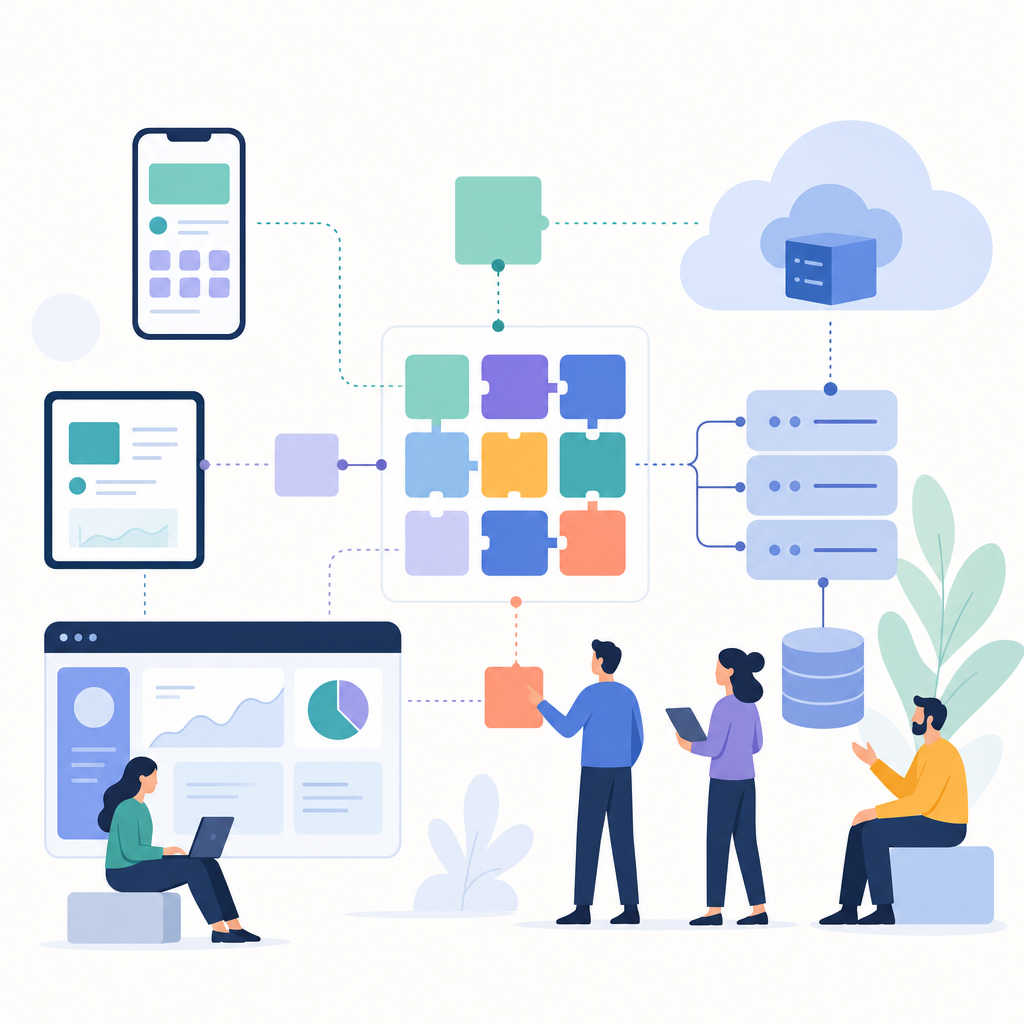
Short answer: A custom software development company should help you decide what to build, what not to build, and how the software will survive real users after launch. Custom software development means designing and engineering software around a specific workflow, data model, integration path, and operating constraint instead of forcing the business into a generic product. The right partner is clear about trade-offs, especially when cross-platform app development, cloud cost, and long-term ownership pull in different directions.
The risky brief is often vague because the business problem crosses too many surfaces at once: a sales team wants a web portal, field staff need an Android app, executives want dashboards, and finance needs data from an older system. A useful build partner turns that noise into decisions.
What should a custom software development company actually do?
A custom software development company should translate business constraints into a buildable product plan, then engineer the software with enough discipline that another team could maintain it later. Design and code matter, but the first value is judgment: which workflow deserves automation, which integration can wait, and which requirement will become expensive if ignored.
Discovery should feel more like a technical interview than a sales call. A partner should ask how work happens when the system is offline, who can approve a record, what data cannot leave the region, how failed syncs are handled, and what happens when two users edit the same object.
Good custom app development services also define the non-product parts early: release process, analytics events, audit logs, permission model, testing responsibility, and code ownership. If those items are missing from the proposal, the project may still look polished in demos while being fragile in production.
When is custom software a better choice than buying SaaS?
Custom software is the better choice when the workflow itself creates business value, when several systems need to act as one, or when generic SaaS would force staff into awkward workarounds. SaaS is still the faster answer for standard needs such as payroll, support tickets, accounting, or basic CRM.
The honest trade-off is cost and commitment. Custom software usually needs more thinking up front, more product ownership from the buyer, and a maintenance budget after launch. It earns that effort only when the process is specific enough that renting someone else's workflow keeps creating friction.
How we checked: For this revision, we tested the SaaS, low-code, custom-build, and first-working-slice recommendations against six checks: workflow fit, integration risk, device coverage, ownership, release path, and maintenance handoff. We did not add vendor claims, client results, market statistics, or private project details.
| Option | Best fit | Watch for | Decision signal |
|---|---|---|---|
| SaaS product | Common business process with light configuration | Feature gaps hidden behind manual exports and spreadsheets | The team can use the default workflow without bending daily work around it |
| Low-code build | Internal tool, temporary workflow, or validation project | Permission logic, performance ceilings, and integration limits | The tool can be rebuilt later without losing critical data or process knowledge |
| Custom software | Differentiated workflow, complex integrations, or product sold to customers | Higher upfront cost and real maintenance responsibility | The workflow is valuable enough that owning the code changes the business case |
Example: a regional distributor may want one system for warehouse picking, delivery confirmation, customer order status, and manager approvals. Four separate tools can look cheaper at first, but staff may later reconcile mismatched records. Treat this as a decision pattern, not as a verified case study.
How should cross-platform app development be decided?
Cross-platform app development is a product decision before it is a framework decision. If the same workflow must run on iOS, Android, tablets, and the web with a consistent release rhythm, a cross-platform approach may reduce duplicated effort. If the app depends heavily on device-specific hardware or platform-only features, separate native builds can still be the cleaner route.
The phrase device-agnostic software has a practical meaning: users should be able to complete the core task on the device they actually have, without the product team rewriting the business logic for every screen size and operating system. That may mean React Native or Flutter for mobile, a web admin panel for operations, and shared APIs behind both. It may also mean saying no to a feature that works beautifully on one platform and badly everywhere else.
The catch: cross-platform does not remove complexity. It moves complexity into shared architecture, testing, and release coordination. A team still has to check camera permissions, offline sync, push notifications, and accessibility on real devices. If a vendor talks about one codebase as if it deletes platform risk, ask how they test edge cases on the devices your users carry.
What do scalable cloud applications need before real scale arrives?
Scalable cloud applications need clean data boundaries, observable systems, and a deployment model that can grow without a rewrite. Early scale is not about buying the largest cloud package.
For most new products, the sensible cloud plan is deliberately boring. Use a clear API layer, a database model that matches the business objects, background jobs for slow tasks, tested backups, and logs that explain user-reported bugs. Amazon Web Services, Microsoft Azure, and Google Cloud can all support that pattern; the architecture matters more than the logo on the invoice.
Overbuilding is a real risk. A startup product does not need the infrastructure of a mature marketplace on day one, and an internal operations tool may never need it. What it does need is a path: which parts can scale vertically for a while, which jobs can move to a queue, where caching is safe, and what data would be painful to migrate later.
How do you evaluate a partner before the contract?
Evaluate a partner by the evidence they produce before the build starts. A polished proposal is useful, but it is not enough; you want to see how the team thinks about risk, ownership, architecture, and the parts of the workflow that are inconvenient to demo.
Ask for a short technical discovery output, not just a timeline. It should name assumptions, open questions, the proposed stack, integration dependencies, and the first version's non-negotiable scope. If the partner cannot explain why a feature belongs in version one, it probably does not.
- Architecture note: a plain-English explanation of backend, frontend, mobile, data, and hosting choices.
- Risk list: the top unknowns, including third-party APIs, offline behavior, permissions, and data migration.
- Ownership terms: who owns the source code, repositories, credentials, designs, and deployment accounts.
- Release plan: how staging, production, App Store submission, rollback, and bug triage will work.
- Maintenance model: what happens after launch, who monitors errors, and how small improvements are priced.
- Security basics: access control, audit trails, encryption in transit, backup handling, and incident contacts.
What should happen in the first 30 days of a build?
The first 30 days should reduce uncertainty, not produce a pile of disconnected screens. A strong team will confirm the user workflow, prove the hardest integration, set up the delivery environment, and define the first release with enough precision that progress can be measured.
For a cross-platform product, that early month should include at least one working path through the real stack. Not a full product. A thin slice: login, one core object, one API call, one mobile or web interaction, one database write, and one deployment to a staging environment. That slice tests the team's assumptions far better than a large static prototype.
Buyers sometimes ask for complete certainty before allowing the team to build anything, then discover that the risky part was never in the document. A better pattern is controlled learning: define the hard questions, build the smallest proof that answers them, then lock scope with better information.
Claim: The first useful milestone is not the prettiest demo; it is the first working slice that touches the real data path.
Why this matters: A slice can expose integration, permission, deployment, and workflow assumptions at the same time, while isolated mockups often hide those issues.
Limit: This does not replace design work. It prevents design from running too far ahead of technical reality.
Action: Ask every finalist to describe the first working slice they would build and what risk it would retire.
What questions expose weak custom app development services?
Weak custom app development services often sound confident until the buyer asks about failure cases. Strong teams can talk plainly about what happens when a payment fails, a mobile sync conflicts, a third-party API goes down, a cloud bill spikes, or a user needs data deleted. Privacy and deletion obligations vary by jurisdiction and product type.
Use questions that force specifics. Which parts of the system are custom and which rely on third-party services? How will the product behave without internet access? What is the plan if App Store review takes longer than expected? Who can deploy to production? How are bugs prioritized after launch?
One useful question is almost blunt: if we stop working together in six months, what will the next team receive? The answer should include repositories, documentation, infrastructure access, environment variables, design files, and a current backlog. A partner that treats handover as an edge case is asking you to accept avoidable lock-in.
Frequently asked questions
How early should we contact a custom software development company?
Contact a partner once you can describe the business problem, the users, the systems involved, and the outcome you want. You do not need a complete feature list. In fact, a good discovery process should challenge the feature list before it hardens into scope.
Is cross-platform app development always cheaper than native development?
No. Cross-platform app development can reduce duplicate work when the same workflow runs across iOS, Android, and web surfaces, but it still needs device testing, platform-specific fixes, and careful release management. Native development may be better for apps that depend heavily on hardware, advanced graphics, or platform-only behavior.
Who should own the code after custom software is built?
The buyer should own the source code, product designs, deployment accounts, and core documentation unless the contract clearly says otherwise for a narrow reason. Shared ownership terms can create problems during maintenance, fundraising, security review, or vendor transition. Get this language settled before work starts.
How do scalable cloud applications avoid early overbuild?
Scalable cloud applications avoid early overbuild by starting with clean architecture, reliable deployment, tested backups, logs, and a data model that can grow. They do not need every advanced cloud pattern on day one. The goal is to leave room for growth without paying for complexity before the product has earned it.