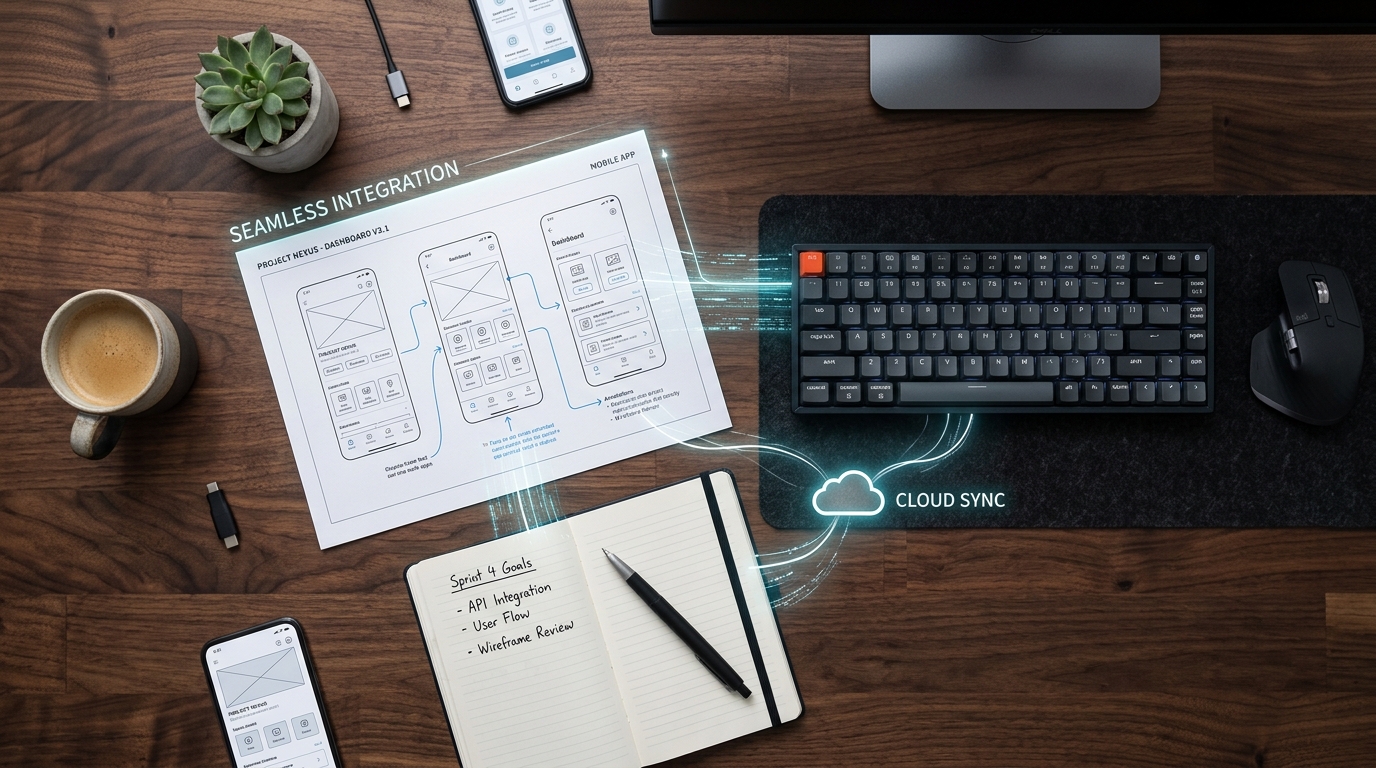
Solving software fatigue requires shifting from simply acquiring standalone applications to deploying an integrated, outcome-driven digital portfolio. In my work as a software engineer at SphereApps, I focus on designing targeted mobile and cloud solutions that eliminate workflow friction rather than adding more noise to your enterprise tech stack.
During an architecture review with a mid-market logistics client last quarter, I noticed a glaring bottleneck. Their field teams were manually copying data from a mobile document scanner into a messaging app, forwarding it to a supervisor, who then re-typed that same data into their central database. They had purchased premium subscriptions for all three tools, yet the actual workflow was completely broken. As an engineer, I see this pattern constantly. Teams don't suffer from a lack of technology; they suffer from profound digital fragmentation.
According to 2026 data compiled by GuruTechLabs, the average enterprise now runs a staggering 291 SaaS apps, making tool sprawl an inevitable drain on budgets and productivity. We are rapidly approaching 292 billion global mobile app downloads this year, as reported by Sensor Tower and Itransition. Yet, despite this massive volume of software, end-users are still struggling to complete basic tasks efficiently.
Diagnose the Root Cause of Digital Friction
The core problem with modern enterprise software is that applications are frequently designed in isolation. A vendor builds a tool to solve one specific micro-problem without considering how that tool fits into the broader operational reality of the user. This creates a disconnected ecosystem where employees act as human API integrations, manually moving data between screens.
For organizations dealing with this, the primary symptom is not necessarily high software costs, though that is a factor. The true cost is latency. When an employee takes five minutes to process a file because they have to switch between four different mobile apps, that latency scales across the entire organization. A strong digital portfolio does not measure success by how many features it offers, but by how many manual steps it actively removes from a user's day.
As my colleague Bora Toprak explained in a recent post, most teams do not have an app problem; they have a fit problem. The software they deploy simply doesn't map to their operational realities.
Evaluate the Shift Toward AI-First Engineering
To fix this fit problem, our engineering team at SphereApps had to rethink how we architect products. My background in progressive web applications (PWAs) and intelligent infrastructure has taught me that we cannot rely on outdated, siloed design models.

A recent 2026 outlook from Deloitte emphasizes that financial pressure and the rapid adoption of agentic technology are forcing software companies to move from simply adding superficial AI features to executing pure AI-first product design. Similarly, research from Adjust notes that AI has fundamentally shifted from a strategic add-on to core infrastructure.
In practice, AI-first architecture means building systems where data routing, categorization, and error-checking happen automatically in the background. If a user uploads a contract, the system should automatically recognize the document type, extract the relevant client details, and route it to the correct cloud repository without requiring five manual clicks. This philosophy underpins every application we design.
Consolidate Your Core Business Applications
When we decided to build a cohesive suite of business applications, our primary goal was utility. We audited the most common workflows that cause friction for our clients and developed targeted solutions to address them directly. Here is how we structure our core portfolio to prioritize connected outcomes.
Deploy a Context-Aware CRM
Customer relationship management is notoriously clunky. Traditional CRM systems demand heavy manual data entry, which leads to poor adoption rates among field teams. We architected our CRM solutions to interact natively with device capabilities. By utilizing automated data capture and integrating directly with cloud solutions, we ensure that client records update in real-time. Whether a sales representative is logging a call or adjusting a contract status, the system handles the administrative burden, allowing the user to focus strictly on client communication.
Standardize Document Workflows with a Reliable PDF Editor
Handling documents on mobile devices remains a frequent source of frustration. Field workers often receive complex technical manuals, contracts, or schematics that they need to review, annotate, and sign on the go. We built a native PDF editor specifically designed to handle large, rendering-heavy files without draining battery life or requiring constant network connectivity.
The architecture allows for offline-first editing. A user can annotate a site plan while in a dead zone, and the application will automatically resolve version conflicts and sync the updated file to the central server the moment a connection is re-established. This eliminates the risk of lost data and removes the need for third-party file conversion tools.
Standardize Cross-Device Mobile Experiences
One of the most persistent challenges I encounter in web and mobile architecture is hardware fragmentation. A corporate IT department might issue standard devices, but BYOD (Bring Your Own Device) policies and staggered upgrade cycles mean that your software must perform flawlessly across wildly different hardware specifications.
When developing our mobile portfolio, rigorous cross-device optimization is a non-negotiable standard. A warehouse manager might be using an older iPhone 11 with degraded battery capacity and an outdated processor. Meanwhile, an executive reviewing analytics in the home office might be using a high-refresh-rate iPhone 14 Pro, while a field supervisor relies on the larger screen real estate of an iPhone 14 Plus.
Our engineering approach ensures that compute-heavy tasks—like complex data sorting or AI-based image recognition—are offloaded to our cloud architecture rather than taxing the local device hardware. This means the application feels just as responsive on legacy hardware as it does on flagship devices. We strip out unnecessary background processes, optimize asset delivery, and utilize adaptive rendering so that the user interface remains fluid regardless of the screen size or processor generation.
Build a Resilient Cloud Architecture
The backbone of any effective software portfolio is the infrastructure running beneath it. Standalone applications rely on fragmented databases, which makes data auditing and cross-platform syncing a nightmare.

By unifying our portfolio under a single, highly resilient cloud environment, we solve the data isolation problem natively. Product Manager Defne Yağız covered this extensively when debunking software strategy myths, highlighting that successful digital transformation requires infrastructure that can handle continuous, high-volume data streaming.
When you use our applications, the underlying cloud solutions are doing the heavy lifting. They manage authentication, secure data transport, and intelligent caching. If you update a client record in the CRM, that metadata instantly becomes available when generating an invoice in the PDF tool. The user never has to bridge the gap between tools because the infrastructure natively connects them.
Audit Your Operational Readiness
Deploying a successful app portfolio requires moving away from feature checklists and focusing entirely on workflow continuity. Before acquiring new tools or commissioning custom development, assess your current bottlenecks. Ask your team exactly where they are manually moving data, which processes require switching between multiple apps, and how device performance varies across your fleet.
The future of enterprise software does not lie in a higher volume of apps. It relies on fewer, smarter applications that actively reduce user friction, utilize intelligent infrastructure, and respect the hardware realities of the people doing the actual work.